Wednesday, March 22, 2017

Get Acquainted With Athermal AWG DWDM Module & its Astounding Applications

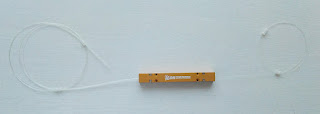
The element of a succession of high performance products that are based on the technology called silica-on-silicon planar and an exclusive athermal packaging design demanding zero software, electrical power, or temperature control for an entirely passive DWDM solution are referred to as Athermal Arrayed Waveguide Grating Dense Wavelength Division Mux/Demultiplexer which is also known as Athermal AWG DWDM Modules.
Athermal AWG DWDM Module
This range of modular products delivers an amalgamation of high channel isolation and very low loss along with longevity as well as reliability. Each module in the range is capable of performing Mux and Demux functions. With Flat top spectral response, both band devices are easily available (including L- and C- band). Apart from this, the custom frequency grids, connectorisation options and fiber type solution are also available. These functions make the modules ideal for several applications; some of them are discussed below:
Astounding Applications of an Athermal AWG DWDM Module:
  • WDM transmission: The WDM transmission is the process of transferring WDM, (the acronym for Wavelength Division Multiplexing) which is a method of combining multiple signals onlaser beams at different IRs (infrared wavelengths) –along the fiber optic media. With 100GHz Athermal AWG DWDM Modulethe WDM transmission process becomes easy and effectual.
  • WDM based ADM: As Add / Drop Multiplexing is a multiplexing function that is employed in optical technology but can also be used in electric signal transmissions by using the principle of WDM transmission.
  • Metro and long haul networks: Metro networks and also long haul networks need to use Athermal AWG DWDM Module on wide basis. These modules offer the long haul networks with the ability to mail information, post news on bulletin boards, and logon at a remote site etc.
  • Optical Signal Processing: An Optical Signal Processing, shortened to OSP is the technology (process) that enables the processing of ocular signals in a way that the data content of such signals may be modified without converting the signals into the electrical domain. This whole process too requires 100GHz Athermal AWG DWDM Module for its efficient yet effective working.
Beyond all the listed applications of Athermal AWG DWDM, there are some more, one of which is ‘Wavelength selective routing’. The AWG DWDM is an ideal choice for all the mentioned applications because of its fetching features which encompass 100GHz ITU channel spacing, Low insertion loss, high stability and reliability etc. These features make the modules effective, durable and long term reliable.

Monday, March 20, 2017

Introduction of Fiber Optic Coupler with its Benefits & Classification

A fiber optic coupler is an indispensable part of the world of electrical devices. Without these no signals would be transmitted or converted from inputs to outputs. This is the reason these are so important thereby this article discussed about these, introduction, classification and benefits in detail.
Fiber Optic Coupler is an optical cog that is capable of connecting single or multiple fiber ends in order to permit the broadcast of light waves in manifold paths. This optical device is also capable of coalescing two or more inputs into a single output while dividing a single input into two or more outputs. In comparison to a connector or a splice, the signals may be even more attenuated by FOC i.e. Fiber Optic Couplers; this is due to the division of input signal amongst the output ports.
Types of Fiber Optic Coupler
Fiber Optic Couplers are broadly classified into two, the active or passive devices. For the operation of active fiber coupler an external power source is required, conversely no power is needed when it comes to operate the passive fiber optic couplers.
Fiber Optic Couplers can be of different types for instance X couplers, PM Fiber Couplers, combiners, stars, splitters and trees etc. Let’s discuss the function of each of the type of the Fiber Optic Couplers:
Combiners: This type of Fiber Optic Coupler combines two signals and yields single output.
Splitters: These supply multiple (two) outputs by using the single optical signal. The splitters can be categorized into T couplers and Y couplers, with the former having an irregular power distribution and latter with equal power allocation.
Tree Couplers: The Tree couplers execute both the functions of combiners as well as splitters in just one device. This categorization is typically based upon the number of inputs and outputs ports. These are either single input with a multi-output or multi-input with a single output.
PM Coupler: This stands for Polarization Maintaining Fiber CouplerIt is a device which either coalesces the luminosity signals from two PM fibers into a one PM fiber, or splits the light rays from the input PM fiber into multiple output PM fibers. Its applications include PM fiber interferometers, signal monitoring in its systems, and also power sharing in polarization sensitive systems etc.
Star Coupler: The role of star coupler is to distribute power from the inputs to the outputs.
Benefits of Fiber Optical Couplers
There are several benefits of using fiber optic couplers. Such as:
  • Low excess loss,
  • High reliability,
  • High stability,
  • Dual operating window,
  • Low polarization dependent loss,
  • High directivity and Stumpy insertion loss.
The listed benefits of Fiber Optical Couplers make them ideal for many applications for instance community antenna networks, optical communication systems and fiber-to-home technology etc.

Optical Fiber In-line Polarizer & its Fine Features

The significance and value of Optical fibers don’t need any explanations or specifications in the world of electronics and technology. These devices are no doubt the tiny part but are equally important as well as requisite for the effective / efficient working of the machinery and electronic. When we talk about optical fiber In-line polarizer these are the cogs which can never be overlooked.
In-line polarizer

Low cost optical fiber In-line polarizer is the device to convert unpolarized light into linearly polarized light. It encompasses both, input as well as output as one input of single mode fiber and one output with polarization maintaining fiber. It can easily be connected conveniently into the optical systems through pigtailed input / output connectors.
Now let’s discuss the fine features of In-line Polarizer:
  • Low insertion loss: in telecommunications, the loss of signal power coming from the insertion of a device into the optical fiber is generally referred to as insertion cost. The insertion cost of the In-line polarization is stumpy and quite lesser than the other similar devices.
  • High extinction ratio: the polarizer especially, the In-line polarizer usually have the high extinction ratio i.e. the ratio of the two optical power levels of a digital signal produced by an ocular source.
  • High return loss: The optical fiber polarizer generates high return loss i.e. the loss of power in the signal reflected / returned by a discontinuity in a broadcast line or ocular fiber.
  • Compactness and light weight: Yet another beneficial feature of an In-line Polarizer is that it is quite compact as well as light weighted. This helps in the placement and execution of the appliance. Its light weight helps it work easily and effortlessly.
  • High stability and reliability: In-line polarizer is always recommended as it is quite stable as well as reliable. Unlike all other types of polarizers, the in-line polarizer has higher stability. This is the reason why companies and industries trust these.
 Beyond all, the optical fiber In-line polarizer is available in market at low costs. There are several organizations which offer and sell the high quality optical fiber solutions at competitive prices and ensure you an effective as well as a durable working.
So, whenever you seek the high quality optical fiber In-line Polarizer, or decide to buy them, make sure you choose a copper-bottomed company to get the best products and high quality services as well as high class solutions at competitive prices!
The significance and value of Optical fibers don’t need any explanations or specifications in the world of electronics and technology. These devices are no doubt the tiny part but are equally important as well as requisite for the effective / efficient working of the machinery and electronic. When we talk about optical fiber In-line polarizer these are the cogs which can never be overlooked.
Optical Fiber In-line Polarizer
Low cost optical fiber In-line polarizer is the device to convert unpolarized light into linearly polarized light. It encompasses both, input as well as output as one input of single mode fiber and one output with polarization maintaining fiber. It can easily be connected conveniently into the optical systems through pigtailed input / output connectors.
Now let’s discuss the fine features of In-line Polarizer:
  • Low insertion loss: in telecommunications, the loss of signal power coming from the insertion of a device into the optical fiber is generally referred to as insertion cost. The insertion cost of the In-line polarization is stumpy and quite lesser than the other similar devices.
  • High extinction ratio: the polarizer especially, the In-line polarizer usually have the high extinction ratio i.e. the ratio of the two optical power levels of a digital signal produced by an ocular source.
  • High return loss: The optical fiber polarizer generates high return loss i.e. the loss of power in the signal reflected / returned by a discontinuity in a broadcast line or ocular fiber.
  • Compactness and light weight: Yet another beneficial feature of an In-line Polarizer is that it is quite compact as well as light weighted. This helps in the placement and execution of the appliance. Its light weight helps it work easily and effortlessly.
  • High stability and reliability: In-line polarizer is always recommended as it is quite stable as well as reliable. Unlike all other types of polarizers, the in-line polarizer has higher stability. This is the reason why companies and industries trust these.
 Beyond all, the optical fiber In-line polarizer is available in market at low costs. There are several organizations which offer and sell the high quality optical fiber solutions at competitive prices and ensure you an effective as well as a durable working.
So, whenever you seek the high quality optical fiber In-line Polarizer, or decide to buy them, make sure you choose a copper-bottomed company to get the best products and high quality services as well as high class solutions at competitive prices!
Save

Tuesday, August 2, 2016

Profitability of the Optical Component Business Improved Last Year and It May Set a New Record in 2016

The average profitability of optical passive component and module suppliers was very close to zero over the last 5 years, despite strong demand for optics. Compared to every other level of the industry supply chain, profitability of the optical component manufacturers was the lowest by far.
Financial reports of several suppliers of optics started to show signs of improvement over the last 2-3 quarters. The average profitability of optical component and module vendors was 2% in 2015, compared to a loss of 1% in 2014. There is a good chance for reaching 5-7% profitability in 2016-2017 and setting a new record. The highest profitability achieved so far was 5.5% in 2010, preceded by more than ten years of heavy losses.
Net profit margins in the optical components value chain
May 25, 2016 News_Release_Profitability of the Optical Component Business Improved Last Year and It May Set a New Record in 2016
Source: Public financial reports
Several component vendors restructured their businesses in 2013-2014 and these efforts are starting to pay off now. Accelink, Applied Optoelectronics, Coadna, Neophotonics and Oclaro reported significant improvements in financial performance. Acacia joined the list of publicly traded vendors recently and holds the record with a 17% net margin for 2015. Finisar’s profits started to improve in the second half of 2015 and we expect this trend to continue.
However, the average profitability is likely to stay in the single digits for a while. This industry is very competitive and it is likely to remain so for the next several years. Demanding customers, shorter product lifecycles and investments required to support development of new products are a heavy burden for suppliers. There are close to 40 vendors in the race to offer 100GbE optics to the cloud companies building mega-datacenters. Not many of these vendors will be successful in the long term, but they will continue to put pressure on the profitability of larger publicly traded companies in the industry.
Many start-up companies, betting their future on supplying high-speed optics to cloud vendors, develop products based on silicon photonics and expect that this new technology will give them a sustainable cost advantage. LightCounting’s report on Integrated Optical Devices offers detailed analysis of the opportunities for silicon photonics technology, and recognizes the potential advantages of this technology. However, we expect that a majority of high-speed Ethernet optics used in mega-datacenters will still be based on more established InP and GaAs based optics even in 2021.
Despite all the risks, developing new manufacturing technologies offers a path to sustainable competitive advantage and long-term profitability. Silicon photonics holds a promise for being such a technology. High-valued acquisitions of silicon photonics companies and the recent IPO of Acacia offered much needed success stories for investors. However, the risk remains high. Many other vendors, starting just to ship silicon photonics based products now, will have to prove themselves in 2016-2018.
DK Photonics – www.dkphotonics.com  specializes in designing and manufacturing of high quality optical passive components mainly for telecommunication, fiber sensor and fiber laser applications,such as 1064nm High Power Isolator,1064nm Components, PM Components, (2+1)x1 Pump Combiner,Pump Laser Protector,Mini-size CWDM,100GHz DWDM,Optical Circulator,PM Circulator,PM Isolator,Fused Coupler,Mini Size Fused WDM.

Wednesday, July 20, 2016

DK Photonics now can write Fiber Bragg Gratings for fiber lasers on demand

Fiber Bragg Gratings for fiber laser
Laser Mirror Gratings
China, 21th July, 2016Optical passive components available at DK Photonics are significant in a number of industries such as telecommunication applications, fiber laser, etc. In order to better give our fiber laser customers to do matching service, DK Photonics work with a Chinese optical research institute, after more than half a year's efforts, and finally produced the FBG Mirrors used for fiber laser.
FBG Mirrors are based on the reflective properties of the Fiber Bragg Grating (FBG) written in the core of an optical fiber waveguide. FBG mirrors’ principal application is to use a high and low reflector to form a stable laser cavity having the lasing wavelength selected by the low reflector.
Fiber Bragg grating (FBG) is a distributed reflector constructed in an optical fiber short segment that allows reflecting particular wavelengths and transmitting the rest of them. The periodic variation of the fiber core refractive index generates a wavelength-specific dielectric mirror, which allows reflecting specific wavelengths. FBG can be used as a high reflector (HR) and output coupler (OC) to make a laser cavity in a fiber laser. Rare earth doped optical fiber increases the laser gain. The major advantage of all-fiber systems where free space mirrors are replaced with a pair of fiber Bragg gratings (FBG’s) is that the realignment process is no longer needed for the entire system functioning period, since FBG is spliced directly to the doped finer and never needs adjusting.
DK Photonics can provide varied wavelengths FBG, such as 1018nm, 1053nm, 1064nm, 1080nm, 1550nm, 1950nm, 2020nm, 2040nm; and can write in all common passive optical fibers, such as 6/125DCF,10/125DCF,15/130DCF,20/125DCF,25/250DCF,30/250DCF,20/400DC Fiber, PM or non-PM types are available. The Max. handling power up to 1000W. The following is main parameter or our FBG:
Parameters
Values
Center Wavelength(nm)
1018nm, 1053nm, 1064nm, 1080nm, 1550nm, 1950nm, 2020nm, 2040nm
Wavelength accuracy
0.2nm
High Re­ector / Output Coupler
HR
OC
Reflectivity
≥99%
3%~20%
Bandwidth
1~3nm
0.2~1nm
Fiber Type
10/125 DCF,15/130DCF, 20/125 DCF,25/250 DCF,30/250 DCF,20/400 DC Fiber, PM or non-PM types are available
Power Handling(core)
20W, 50W, 100W, 500W,1000W.
Applications
FBGs offer multiple applications. It can replace conventional dielectric mirrors to provide optical feedback. It can be also used to create a multi-wavelength Raman fiber laser.
Fiber lasers offer a compact, electrically efficient alternative to Ar-Kr and Nd:YAG technologies. The FBG can be applied to fiber lasers of any type:
  • Single frequency fiber lasers;
  • Raman fiber laser;
  • Fixed frequency visible wavelength lasers;
  • Tunable frequency visible wavelength lasers;
  • Ytterbium doped fiber lasers;
  • Q-switched fiber lasers;
  • Pulsed fiber lasers;
  • Stabilized multi-mode emission sources;
  • Fine optical fiber responder, etc.
To obtain more information about the products, visit http://www.dkphotonics.com/.
About DK Photonics
The DK Photonics claims that they even provide customized solutions to their patrons. Those industries who wish their products to be distinctive can contact them for the same. The team mentions that they have passed the ISO9001 quality tests and hence, there is no compromise in this aspect.